August 27, 2026 · Audio-evoked potentials · v4
Gear: Suunto Sonic bone conduction headphones
Specs, a first impression, and the one property that decides which protocols can run on them at all.
- [C]
- AEP-0005
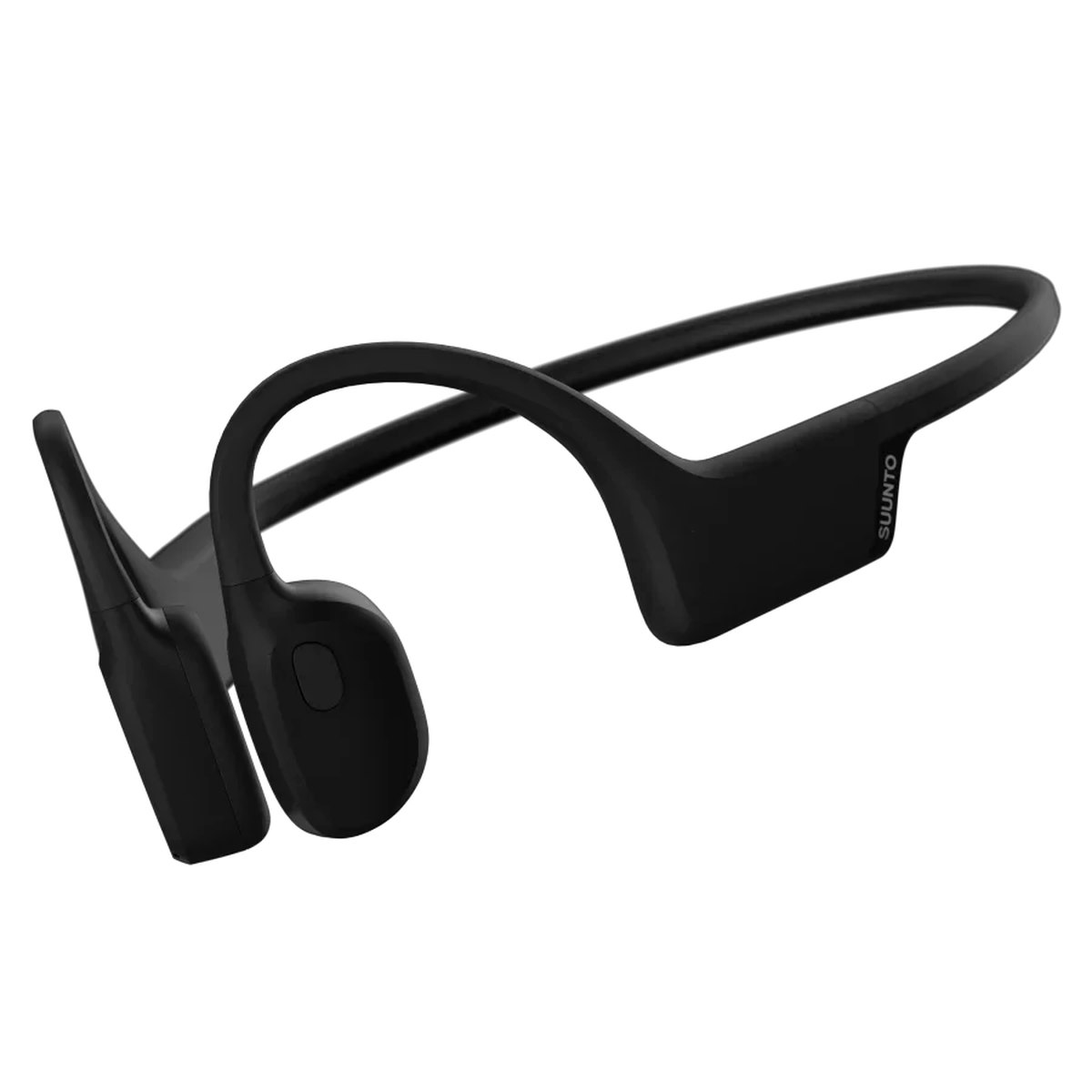
Gear entry. Specifications, then what the delivery path allows, then an impression kept separate from both.
Specifications
Checked 2026-08-27.
| Path | Bone conduction, open ear |
| Chip / Bluetooth | Qualcomm QCC3044, Bluetooth 5.2, multipoint |
| Codec | aptX Adaptive |
| Stated frequency range | 20 Hz – 20 kHz |
| Microphones | Dual, cVc echo cancelling and noise suppression |
| Battery | 140 mAh, 10 h; 5 min charge ≈ 90 min use; full ≈ 1 h |
| Weight | 30.6 g |
| Materials | Titanium alloy, silicone |
| Ingress | IP55 |
| Price | $149 USD at launch; $79 on the Suunto US store when checked |
“Dual” is the microphones, not the transducers. Every listing checked says “Built-in Dual Mics.” Two bone transducers, one per side, is standard for any stereo bone-conduction headset and not a distinguishing feature.
The property that decides the rest
A sealed transducer at one ear gives roughly 40–60 dB of interaural attenuation. That separation is what makes two ears independent.
A transducer on the skull gives close to none. The skull couples both cochleae, so the signal arrives at both at once.
This is what bone conduction is, not a fault in the product.
Consequence for protocol selection: the rulebase returns laterality undefined — not
“left”, not “bilateral-ish” — for any path under 15 dB of interaural attenuation. A path
that cannot deliver a left-ear stimulus gets no downstream per-ear predictions.
| protocol | usable |
|---|---|
| Isochronic tones, AM envelopes, any shared signal | yes |
| Binaural beats | no |
| Interaural time differences, dichotic drive | no |
| Anything reporting a per-ear result | no |
Two further limits, neither disqualifying:
- 20 Hz – 20 kHz is an air-conduction-style specification. Not verified as delivered through bone on a head. For evoked-potential work the delivered envelope is what matters, and it is unmeasured.
- Nearest measured air-versus-bone separation on hand is 22 dB, from tuning-fork work on a different transducer for a different purpose.
First impression
One person, one session, unblinded. Not evidence; the tier reflects that.
The headphones were extremely easy to get set up, and this is the first time that I’ve used bone conduction headphones, so it truly blew my mind experiencing them. I couldn’t believe how high resolution they were, even though it’s not even sound directly through the ears. Still trying to wrap my head around it. But regardless, this is a great buy.
Also, just as a side note, it’s a really great way to have audio-evoked potentials or something like Brain.fm running during family time so that my ears aren’t covered, and I’m more aware and more present, but can still be running a therapeutic music solution.
The defensible part of that is about compliance, not acoustics: a protocol that runs while you are present with your family is a protocol that gets run. Nothing here measures whether the delivered signal is adequate — only that the barrier to wearing it is lower.
Claims this post rests on
- AEP-0005 [C] A designed acoustic protocol can draw a specified compiled signal in the medial superior olive, recoverable from the recorded neurophonic and distinguishable from matched-energy plain tonotopic drive, at a drive level that published calibration places in the regime where activity-dependent calcium influx and transcription-factor activation are known to follow. AMENDED 2026-08-15b/c — the original wording claimed the drive could be placed ABOVE THE THRESHOLD FOR SUPRATHRESHOLD COINCIDENT FIRING. F-suprathreshold FIRED against that wording (the far-field is postsynaptic and cannot report firing) and was then RESTATED: firing is not the gating variable, calcium is, and subthreshold depolarization is a second documented route to it. See both dated sections.
Each claim is maintained in polarizetech/research with recorded
disproof conditions and disconfirming evidence. A tier is computed, never asserted.
Version history 4 revisions
Generated from this site's git history. with Claude means the commit carries a co-author line for an Anthropic model: an LLM took part in that change, not necessarily in every word of it, and git cannot say which. The same history on GitHub →
-
v4 2026-09-15 07:04 Post: a research assistant that keeps nothing; Suunto figure rebuilt on tokens
A transducer on the skull gives close to none. The skull couples both cochleae, so the signal arrives at both at once.{% include fig-bone-vs-air.html %}This is what bone conduction is, not a fault in the product. -
v3 2026-09-12 07:54 posts: inline source cards, and every post cut to the point
---FirstGear entryin a gear category.The format is deliberate: **specificationsSpecifications, then whatthe physics ofthe delivery path allows, thena personalan impression kept separate from both.**## Specifications| Stated frequency range | 20 Hz – 20 kHz || Microphones | Dual,withcVc echo cancelling and noise suppression || Battery | 140 mAh, 10 hplaytime; 5 min charge ≈ 90 min use; fullcharge≈ 1 h || Weight | 30.6 g || Materials | Titanium alloyand, silicone || Ingress | IP55 || Price | $149 USD at launch; $79 on the Suunto US store when checked |One correction worth making, because it is easy to repeat.**"Dual"refers tois the microphones, not the transducers.** Every listingIchecked says "Built-in Dual Mics.".Two bone transducers, one per side, isthestandardarrangementfor any stereo bone-conduction headset andisnot a distinguishing feature.## The property that decideseverythingtheelserestA sealed transducer at one ear gives roughly 40–60 dB of interaural attenuation. That separation is what makes two ears independent.A sealed transducer at one ear gives roughly 40–60 dB of **interaural attenuation** — the signal arriving at the far ear is far quieter than at the near one, which is what makes two ears independent.A transducer on the skull gives close to none. The skull couples both cochleae, soa bone-conductedthe signal arrives at both at once.This is not a shortcoming of this product. It is what bone conduction is.This is what bone conduction is, not a fault in the product.It has a hard consequenceConsequence for protocol selection: thework I do. Myrulebase returnsalateralityof`undefined` — not "left", not "bilateral-ish" — for anydeliverypathwithunder 15 dB of interaural attenuation. A path that cannot deliver a left-ear stimulusmustgetsnot haveno downstream per-ear predictionsmade as though it did.So, for this device:| protocol | usable || Anything reporting a per-ear result | **no** |Two further limits, neither disqualifying:Two further limits, neither disqualifying. The- 20 Hz – 20 kHzfigureis an air-conduction-style specification.and I have notNot verifieditas *delivered* through bone on a head.— forFor evoked-potential work the delivered envelope is what matters, and it is unmeasured.And the nearest measured air-versus-bone separation I have is 22 dB, from tuning-fork work on a different transducer for a different purpose.- Nearest measured air-versus-bone separation on hand is 22 dB, from tuning-fork work on a different transducer for a different purpose.## First impressionMine, oneOne person, one session, unblinded. Not evidence, and; the tieron this postreflects that.> The headphones were extremely easy to get set up, and this is the first time > that I've used bone conduction headphones, so it truly blew my mind experiencing > them. I couldn't believe how high resolution they were, even though it's not > even sound directly through the ears. Still trying to wrap my head around it. > But regardless, this is a great buy. > > Also, just as a side note, it's a really great way to have audio-evoked > potentials or something like Brain.fm running during family time so that my ears > aren't covered, and I'm more aware and more present, but can still be running a > therapeutic music solution.ThatThelastdefensiblepointpartisofthe one I would actually defend, and itthat is about compliance,rather thannot acoustics:**a protocol thatcan runruns while you are present with your family is a protocol that gets run.**Nothing here measures whether the delivered signal is adequatefor the purpose— only that the barrier to wearing it ismuchlower. -
v2 2026-09-04 12:40 site: product image on the Suunto post
citations:image: /assets/posts/bonesuunto-vs-air-conductionsonic.svgjpgimage_alt: >-Two heads compared. Left, a sealed transducer at one ear: roughly 40 to 60 decibelsThe Suunto Sonic, a bone-conduction headset: a wraparound neckband with twotransducer pads that sit on the cheekbones rather than over the ear canals.image_credit: >-ofManufacturerinterauralproductattenuationimage,two independent earsSuunto.Right,Reproduced to illustrate atransducerreviewonof theskull:roughly 0 to 10 decibels, because the skull couples both cochleae.image_credit:product."Diagram drawnDesaturated for thispostsite."--- -
v1 2026-09-02 09:29 gear review: Suunto Sonic, and a gear-review category
v1: the original version, as first committed. Read it on GitHub →